With the holidays just around the corner, a little liquor in the cabinet can be necessary to keep guests happy—and cope with in-laws who overstay their welcome. When shopping, choose a product that’s not only high-quality but also sustainable, to give back during this season of selflessness.
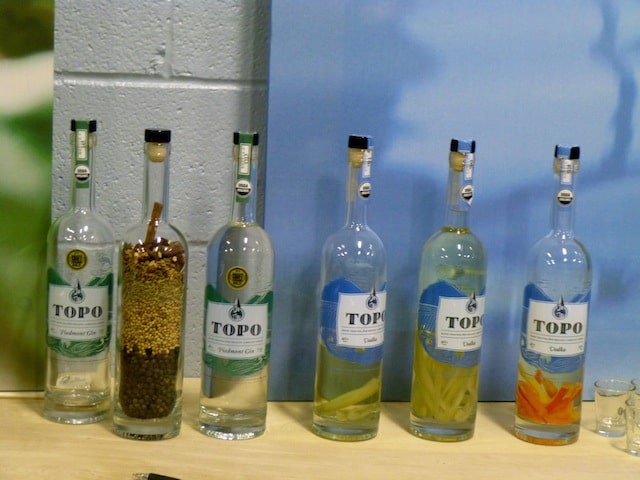
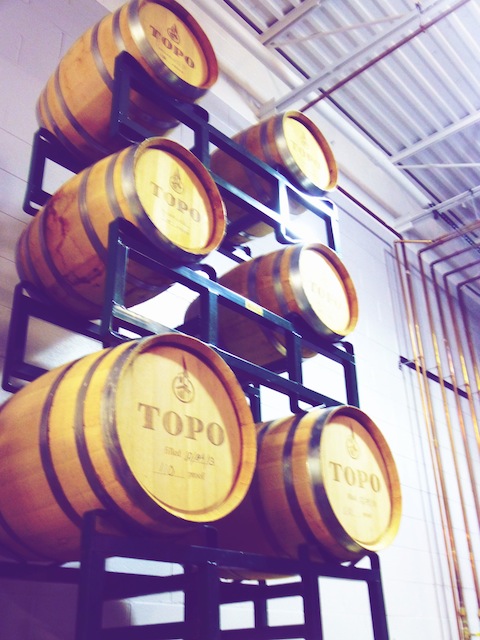
Stocking up on vodka, gin, or whiskey from Top of the Hill Distillery (TOPO) in Chapel Hill supports the North Carolina community, local businesses, and organic agriculture. In 2012, owner Scott Maitland opened the South’s only organic distillery in the old Chapel Hill News building. TOPO handcrafts its spirits from scratch, bottling products in-house in a Green+ certified, eco-friendly facility. With a closed-loop water system, the heat exchanger reuses water, reducing waste and energy use.
I’m not usually much of a spirit drinker myself; however, the idea of an organic distillery fascinated me. I’ll admit I held some preconceived notions, as I’m guilty of sometimes stereotyping organic advocates as yoga-practicing, granola-crunching hippies. (What kind of Whole Foods flower child opens a distillery?) I immediately signed up for a tour to see for myself.
The Man Behind the Business
As a West Point graduate and ex-Army officer, Maitland squashed that stereotype. Although some idealistic nostalgia for an era before strip malls motivated his business decisions, he openly admits he didn’t come around to these practices “from the hippie side of the equation.”
“Anyway you choose to look at it, mass-produced genetically modified foods are having unintended impacts on the food chain, and I want to do my best to reduce that,” he explains.
Maitland grew up in Southern California, anxious to escape a place filled with the “wholesale destruction of farmland into strip malls,” and he vowed to find—or recreate—a 1950s version of SoCal. After finishing with the Army, Maitland headed south to Chapel Hill, North Carolina, to begin law school in a region whose culture stemmed from a sense of place and connection to the land. Rumors that T.G.I. Friday’s planned to move downtown spurred Maitland’s anti-chain aspirations into action. Intrigued by the idea of producing a locally made product that could only be enjoyed at a neighborhood eatery, he opened Top of the Hill Brewery and Restaurant, the fifth-oldest North Carolina brewpub and one of the top North Carolina attractions.
Helping the Community
In 2004, after serving as Chairman of the Chamber of Commerce, Maitland became increasingly aware of how franchises robbed communities of the ability to keep money local. Even a “local North Carolina” beer did not truly exist, as “locally brewed beer” would use imported barley and hops from elsewhere—places with superior soil and climate for those ingredients.
Maitland wanted to utilize local producers at his restaurant, but suppliers couldn’t keep up with his bustling business, which serves up to 1,500–1,750 dinners on a basketball game night. That’s when he decided to open an organic distillery—the first of its kind in the South—where he could make world-class spirits from 100% local ingredients. He bought Soft Red Winter Wheat from Williams Winslow’s Scotland Neck Farm as his base component, single-handedly keeping the state’s only organic wheat farm at the time in business.
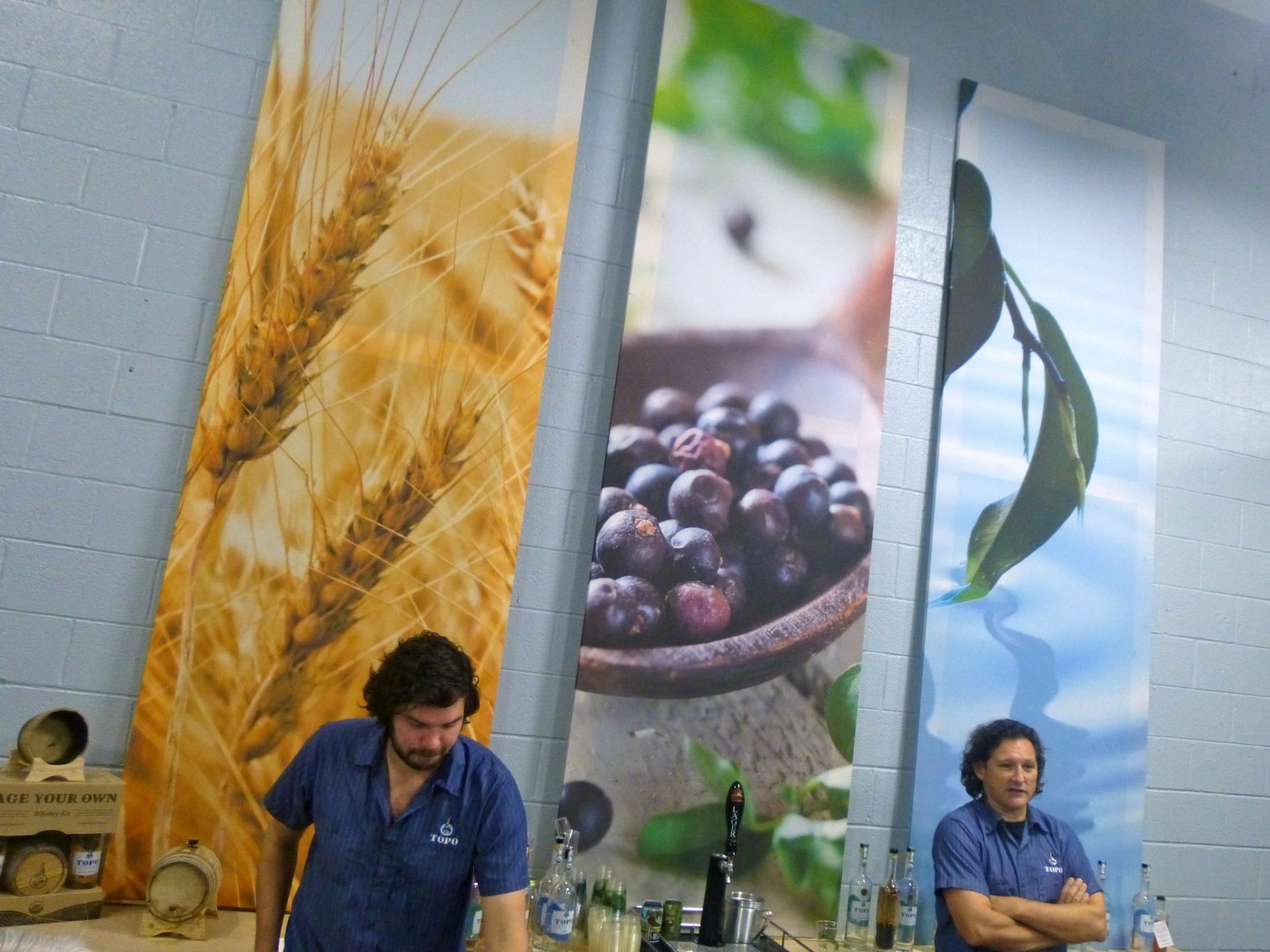
Although it took longer than anticipated to get the business up and running, Maitland—along with his best friend (and the distillery’s “spirit guide”) Esteban McMahan—now runs an award-winning operation that continues to grow. Production began with vodka; however, customers can now purchase whiskey, rum, and even “age-your-own-whiskey” kits. TOPO’s spirits have earned 50 nationwide accolades—not bad for a business started by friends with no previous experience in distilling.
Despite the long list of impressive awards, Maitland reflects, “I’m most proud of taking an ingredient three times as expensive as its non-organic equivalent and still selling world-class spirits cheaper than Absolut and Grey Goose. These companies inflate their prices because they are paying rappers to endorse their products.” He smirks, “Who needs Jay-Z and P. Diddy when you have me?”

Organic Outreach
Throughout this journey, Maitland has created and maintained a symbiotic relationship with local farmers. TOPO shares spent mash with a local farmer to use as hog feed, and the pigs return to the restaurant in the form of organic sausages and pork belly. Maitland continues to expand the market for organic products, especially as TOPO plans to become the only continental U.S. producer of organic rum. Currently, Florida houses the only American organic sugar cane farm; however, Maitland hopes his business will convince cane farms closer to home to switch to organic practices.
Maitland also uses academic and educational outreach to inspire others to embrace organic. His businesses have supported local festivals and organizations like the TerraVITA event in Chapel Hill and the Abundance Foundation in Pittsboro. To enact widespread change, however, Maitland knows you can’t just preach to the choir. He reaches non-believers as an adjunct professor at UNC’s business school and a teacher at the North Carolina School of Science and Math, hoping to encourage his students to embrace better land stewardship and resist the spread of chain businesses.
The Future
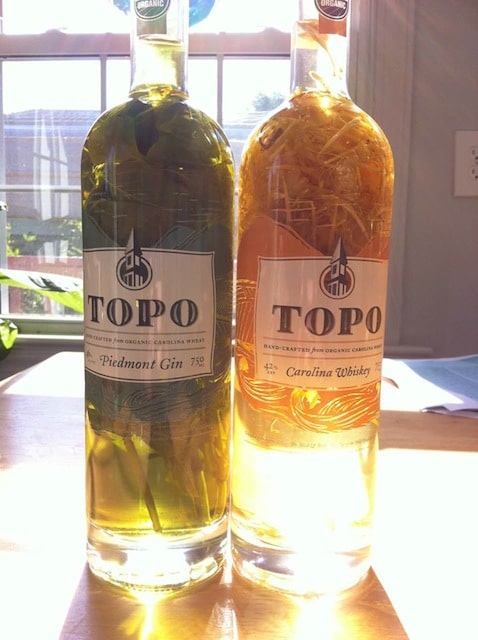
Although I was slightly disappointed that my distillery tour guides weren’t decked out in tie-dye and bell bottoms (though it did have a new-age-sounding “spirit guide”!), I learned a lot from TOPO’s inspirational story. Not only that, but the product itself was unquestionably superior. Balancing TOPO’s vodka in my left hand and the mass-distributed Tito’s “handmade” vodka in my right, I was skeptical when the facility’s “spirit guide” claimed, “It doesn’t really take anything special to taste the difference”; however, one sniff and one sip made me a believer. Some vodkas have an almost medicinal, isopropanol quality, but TOPO’s has a slight sweetness and is much smoother going down. Our tour guide attributed this difference to TOPO (1) using wheat instead of corn as its base, (2) attentively controlling the fermentation as the mash is concentrated into spirit, and (3) minimizing the use of charcoal filtering so the slightly sweet flavor isn’t removed along with the extra proteins.
Hopefully, Maitland will inspire other trailblazers to start and support local businesses to further the creation of “chain-free” communities. It’s sad to think some people complain about overpriced organic produce, yet are willing to pay more for a rapper’s stamp of approval on a mass-produced product. Maitland proves a high-quality product can cost less (his bottles range from $21.95 to $28.95) if you harness local resources. The direction of the future is up to the daily decisions of consumers. In my opinion, shopping local is one of the greatest gifts you can give your community—and yourself.