

By Himanshu Agarwal
India’s spiritual landscape is as diverse as it is fascinating, with nature often playing a central role in religious devotion.
Across the country, animals are revered, protected, or even offered in sacred rituals—each act rooted in deep symbolism and tradition.
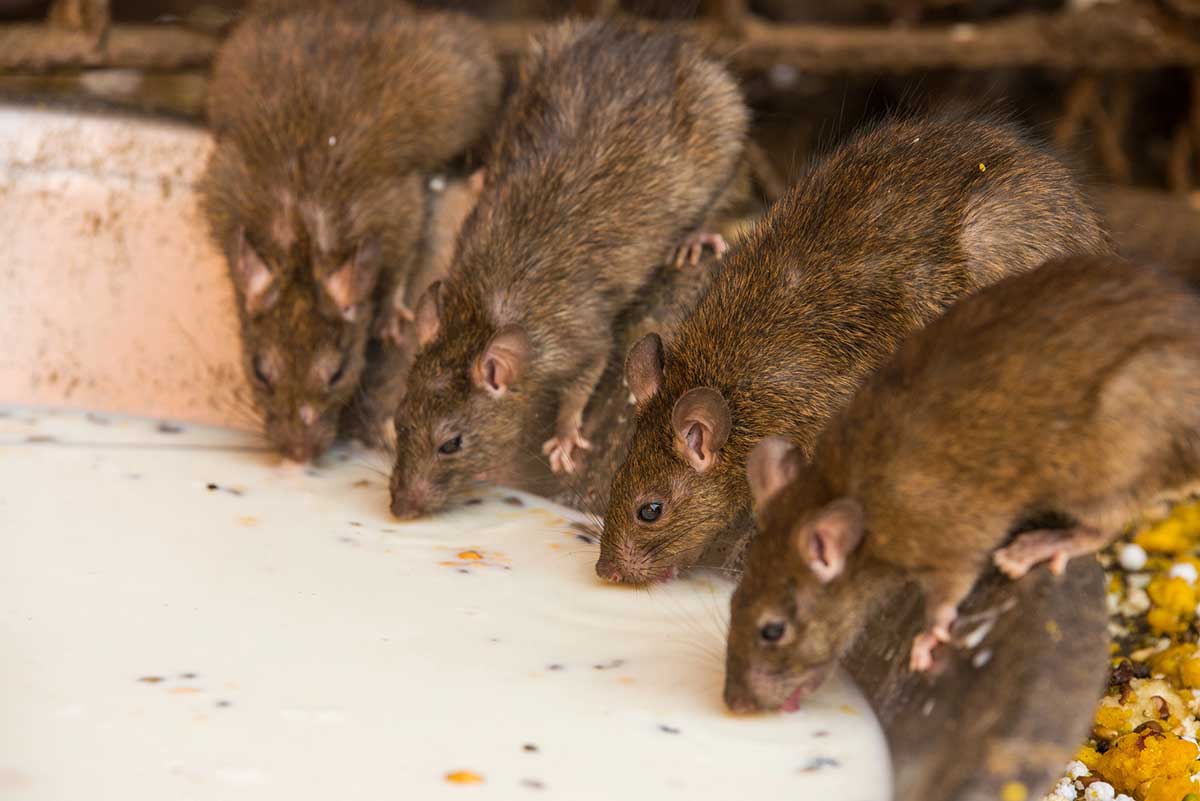
Among the most intriguing expressions of this reverence is found at the Karni Mata Temple, where thousands of rats are not only welcomed, but worshipped.
The Legend
The Karni Mata Temple in Deshnoke—about 20 minutes from Bikaner, Rajasthan—holds two main legends spun around the mysterious worship of rats. According to one, a 20,000-strong army fled battle and went running to the Karni Mata Temple.
The temple spared their lives, but banished the cowards to live in the temple as rats. Thankful to not have been sentenced to death, they vowed to serve Karni Mata for eternity.
The other legend has it that Karni Mata’s stepson drowned in a lake while trying to drink water. Karni Mata then sent the God of Death to revive him. The God of Death granted a special gift to Karni Mata, allowing all her male children to be reincarnated as rats.
Architecture Of The Temple
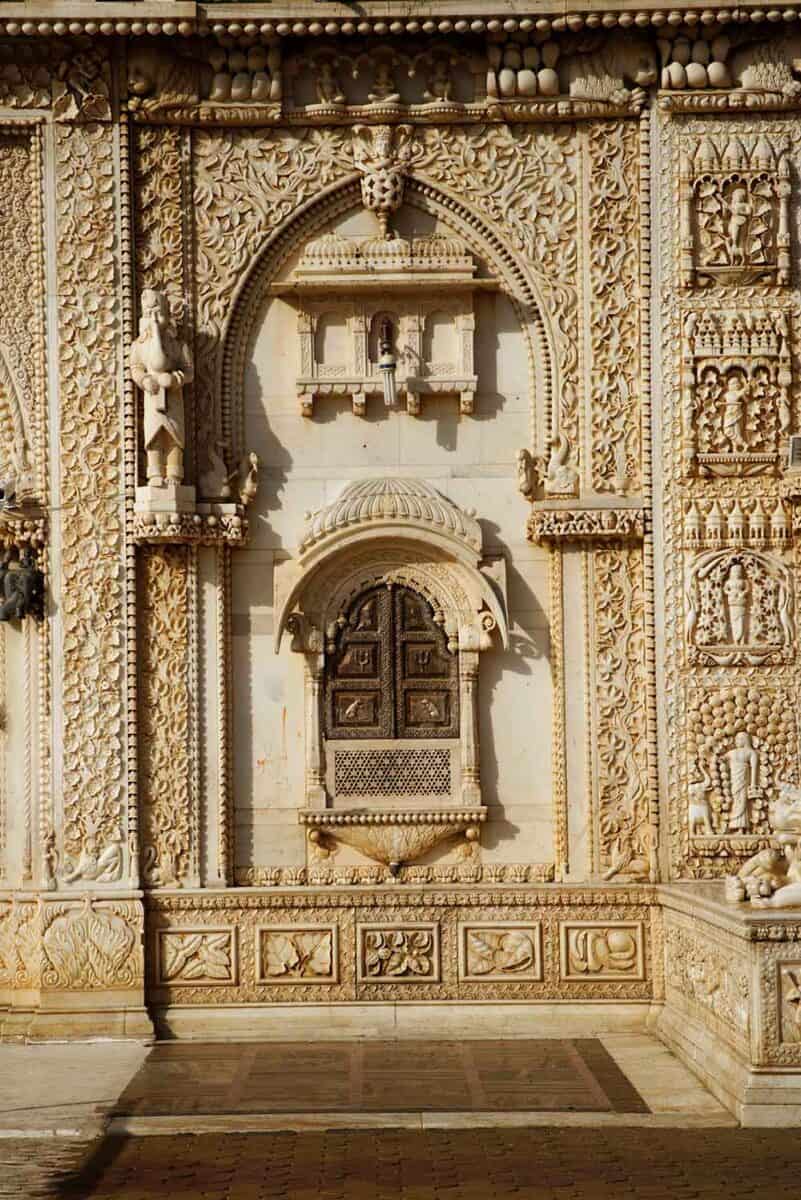
Temple architecture is heavily influenced by the Mughal style, with the entire structure showcasing beautiful white marble.
In terms of idols, there is a sacred sanctum, a statue of a trident-touting Karni Mata and, of course, the many rats. Silver doors with panels depicting the various legends are also featured.
Present Day Worship
Over 20,000 rats are worshipped in this temple, and visitors are prohibited from harming them. Extreme measures like building netting and grills have even been employed to ensure the rats’ safety.
Moreover, eating the food nibbled on by these rats is considered to be a “high honor.” While the hygienic safety of this practice is questionable, it’s created a sense of respect toward these often neglected, despised creatures.
And if someone happens to kill any of these rats, they are to be replaced with a gold or silver Khaba—a pharaoh of Ancient Egypt during the 3rd dynasty of the Old Kingdom—of the same size, shape, height, and weight.
Visiting Karni Mata Temple
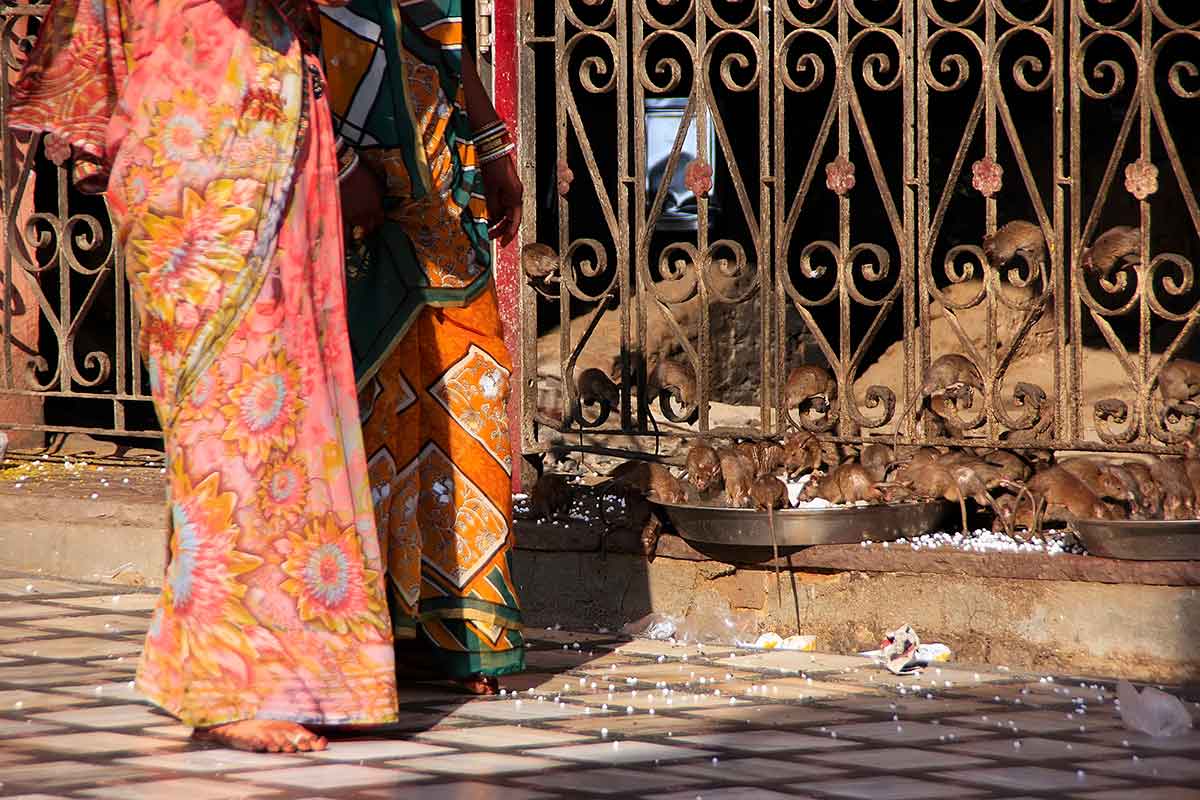
The temple opens daily at 4am when the priests perform Aarti and offer Prasad to the people. During this time, visitors also make offerings to the rats.
Most of the rats are black, and the few white ones are considered Holy. In fact, spotting them is deemed good luck!
Despite the huge rat population, the city of Bikaner has never been affected by plague.
Additionally, when these rats die, they produce no foul odor. Even crazier, it’s been noted that these rat deaths are immediately followed by rat births.
Coincidence? We may never know.
Myths & Realities
Whether you choose to believe in these legends or not, the folklore surrounding the rats has made them beloved to the local people.
That’s truth. No matter your beliefs, it’s interesting to visit this temple when in Rajasthan and celebrate these furry little creatures.
You’ll no doubt be inspired by the importance that mythology holds in local lives, and the positive feeling that comes with helping nature’s creations.
Have you visited Karni Mata Temple?
About Himanshu Agarwal
Himanshu Agarwal seeks to unravel the mysteries associated with the Indian culture and travels places in search of such awe inspiring tales and legends associated with religious worship and traditions. While not unravelling the mysteries of unique destinations, he likes to devote time to writing a travelogue, and blogs at Pearls India Tour & Tour To India. He has a keen eye for the unusual, and loves to read about mythical places in India.