*Editor’s note: This interview was originally published in November 2016, and has been updated with new information on ethical honey sourcing.
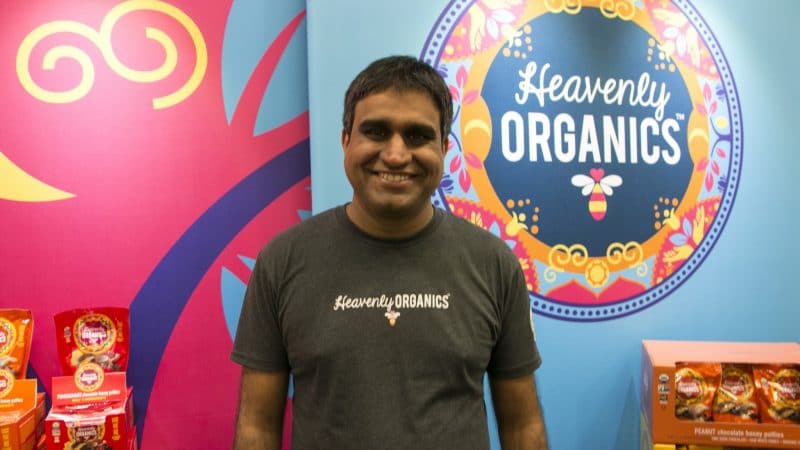
Amit Hooda grew up around farming in India, though aspired to take his love of agriculture beyond solely growing; he wanted to sow the seeds of peace.
Hooda chose to start a business in active conflict zones in Central and North India to create economic stability for its inhabitants. The product would be honey; smoke-free harvested honey that ensured a pesticide-free life for the bees, to be exact.
Amit co-founded Heavenly Organics in an effort “to make the world a sweeter place one jar of honey at a time.” Along with sustainably crafted raw organic honey, his business creates a source of income for families who would otherwise struggle to make a living.
Epicure & Culture caught up with Hooda to learn more about the business and how it’s improving the lives of Indian workers.
How Jars Of Ethical Honey Are Bringing Peace To Conflict Zones
1. Why did you decide to focus specifically on honey?
I grew up in a household that taught me not only to respect the lives of fellow humans but also those of animals and the environment. The business my father and I dreamed of creating was one that would be founded on the principles of non-violence and respect; in other words, a business founded on ethics and purist beliefs.
My father devoted his entire life to the preservation of traditional and sustainable farming practices by sharing his knowledge with small farmers, impacting the mode in which they farmed and harvested their crops.
The concept of honey was not an easy idea to settle upon, but it was one that could work well in central and northern India, areas with significant conflict, where people struggled the most to make a living.
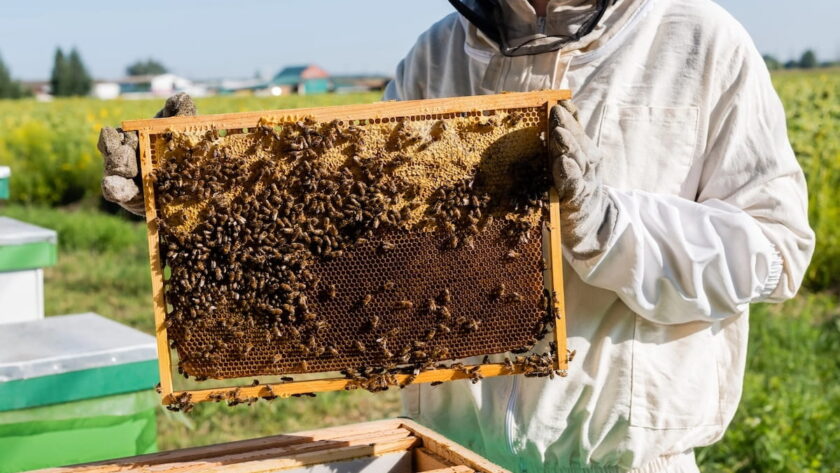
In 2004, I remember my father and I settled upon the idea of honey, a sweet food that had incredible antibacterial and remedial benefits, but that was being plagued by the use of pesticides, antibiotics and GMOs. We asked ourselves: Could we come up with a more peaceful process to collect honey without harming the bees?
If we were going to have a business model based on peace we wanted to make sure that it would be one that was peaceful for all the life forms.

2. Why is it important for honey to be raw?
What many people do not realize is that raw honey and filtered honey are like two sides of a coin. It is unfair to label them both as honey when they are vastly different.
Unfortunately, most commercially produced honey nowadays contains no traces of pollen and phytonutrients; agents that help build a strong immune system and prevent diseases like cancer. Filtered honey contains none of the medicinal value that raw and organic honey has. If you want the nutritional value, honey needs to be raw.
In addition to this, it is imperative that we ensure honey is organic, meaning it is free of pesticides and other harmful substances, to ensure the survival of bees.
3. Why is it important for honey to be organic?
Currently, we can see a decline in the bee population. This is due to the harmful extraction practices they have been placed under.
Their numbers are decimating, but by switching over to organic and more peaceful extraction practices we can help ensure their survival.
Humans have used bees for honey for over 10,000 years. It’s about time their lives are respected and taken into consideration for all that they provide for us.
4. How did you choose the exact location of your business and employees?
I grew up in a troubled time in 1980s India, where every day I would hear of the Maoist violence occurring all around me. Violence was rampant, and the belief was that in order to stay alive you had to fight into the malicious system. Nevertheless, my parents managed to instill in me purist values, teaching me compassion and respect.
Growing up I had no interest for law or governmental change, as I did not see this as an immediate answer. Instead, I was far more interested in the day-to-day lives of people, like those who had to keep their girls at home out of fear that they would be kidnapped, or those who worried about their boys being recruited into the militant groups. These were the people that I wanted to help, and this passion to help the local community stayed with me throughout my childhood.
I’ve always wanted to give back to society. By providing people with a source of income and employment I came to realize that this is more effective than doing charity work.
There have been many challenges working in a conflict zone; however the rewards have managed to outweigh them.
In fact, I plan to expand the business into Afghanistan, where I’ll be providing opium Afghan farmers an alternative, by helping them turn their farms into almond crops. That way, they’ll have a better way to sustain themselves.
Editor’s Note: Amit’s expansion into Afghanistan highlights a strategy known as Alternative Development or Crop Substitution. In regions where illicit crops like opium poppies are the primary source of income, providing farmers with the infrastructure and market access for legal, high-value crops (like almonds or honey) is a proven method for reducing conflict and establishing long-term economic peace.

5. What has been one of the biggest success stories from the families you worked with?
When we started our business, we knew exactly who we wanted to target. Much like the Naxalites, we wanted to appeal to the young male. This began to help cease conflicts in some areas in northern and central India, where I spent my childhood. What we found was that, in most cases, young males were the most likely people to join the guerrilla groups; not because they were violent or in agreement with the ideology, but because it was their only means of survival.
So what did we do? We drove most of our efforts into approaching young men in the region before they had the chance to join the guerrillas.
So far we have seen many positive outcomes. Currently, Heavenly Organics employs over 650 families; families who do not have to worry about their economic situation and who now have a sense of confidence and ownership over their own lives.
Moreover, these families are now able to diversify their means of survival and no longer have to resort to violence to provide for their loved ones. They now have a sustainable income. Their lives have improved greatly, as they now see a future for their children.
6. How can Epicure & Culture readers get involved with your cause?
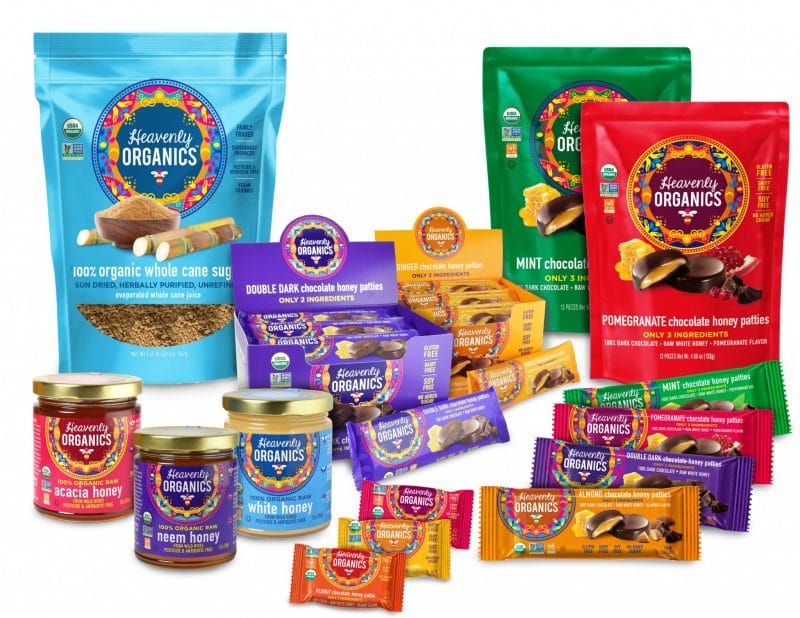
People can get involved by buying the product, supporting our cause, and helping spread the mission.
Ultimately, we want to make sure that the people we employ are self-reliant and do not have to worry for the economic stability of their families. By consuming our product and spreading the word, you would be guaranteeing a stable future for our employees.
In addition, you can help by looking more carefully into what products you’re buying and the ethics behind those products. It is up to the consumer to demand better practices from companies. Only then can we ensure that ethical business models will be followed.
Tips For Choosing Ethical Honey
As Amit mentioned, the power lies with the consumer. However, navigating your local honey aisle can be confusing with so many buzzwords.
To ensure your honey supports both the environment and the people who harvest it, look for these key indicators:
1. Check for “Raw” and “Unfiltered” labels
Most commercial honey is ultra-filtered and high-heat pasteurized, which strips away the beneficial pollen and enzymes. By choosing raw honey, you are supporting a production process that keeps the product in its most natural state.
2. Look for organic certification
To be truly organic, bees must forage in areas free of synthetic pesticides and GMOs for a significant radius around the hive.
Buying organic leads to a cleaner product for you—and it helps ensure bees aren’t being poisoned while they work.
You can learn more about honey certification labels here.
3. Prioritize Fair Trade and social impact
Honey is often produced in developing regions where labor exploitation can occur. Ethical honey should provide a living wage to the harvesters.
Look for companies that are transparent about their supply chain or hold Fair Trade certifications—which helps ensure your purchase provides economic stability to the local community (not just the middleman).
4. Avoid honey blends
Be wary of cheap honey that lists “honey blend” or doesn’t specify a country of origin. These are often the result of honey laundering—a process where honey is shipped through middleman countries to hide its true origin, often to bypass safety regulations or tariffs.
These products are frequently cut with corn syrup, rice syrup, or cane sugar, a practice known as honey fraud.
True ethical honey is single-origin and clearly traceable back to the specific co-ops or regions where it was harvested.
5. Meet the honey maker
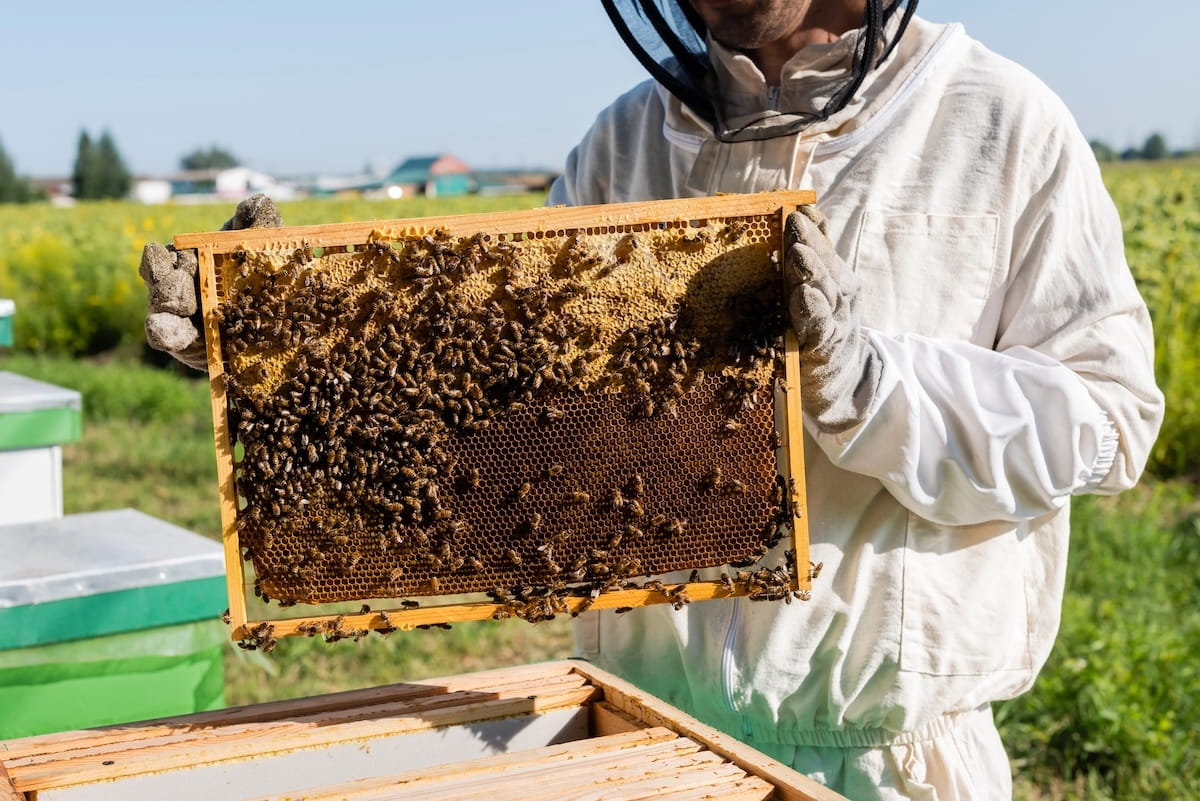
The most effective way to guarantee your honey is ethical is to buy as close to the source as possible. While supermarkets prioritize shelf-life and low prices, buying from a local beekeeper allows you to ask questions directly.
A transparent maker can tell you exactly where their hives are located, how they treat for mites, and how much honey they leave for the bees to ensure the hive’s winter survival.