
Editor’s Note: This article was originally published in 2014. While the brand featured in this story, Bee Local, is no longer in operation as a standalone entity, the expert insights on honey terroir and industry ethics from beekeeper Damian Magista remain a vital resource for ethical foodies.
For those who are used to buying honey-filled bears from the supermarket, stop right now.
According to veteran beekeeper and honey expert Damian Magista, the mass-produced commercial honey industry often prioritizes convenience and shelf-life over hive health and consumer nutrition.
The Problem With Commercial Honey
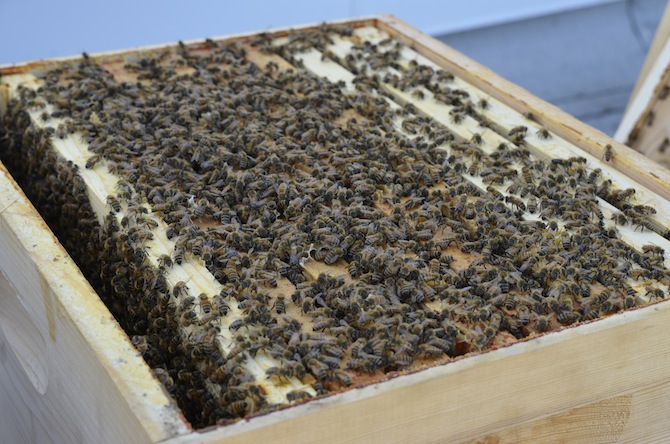
According to Magista, commercial honey companies often move hives around constantly to service industrial crops, which can have a detrimental effect on bee health. Moreover, once the honey is procured, it is typically heated to high temperatures (pasteurization) so it can flow smoothly through industrial machines. This process depletes the very flavors and nutrients that make honey a superfood.
You can typically tell when honey has been through this process as it tastes over-cooked and over-caramelized. Truly good honey doesn’t need to be cooked, blended, or modified; instead, it holds a natural flavor profile that is immediately apparent upon tasting. Furthermore, because commercial honey often comes from forage exposed to synthetic chemicals and herbicides, consumers may unwittingly be ingesting those substances as well.
As Karen Foster of Truth Theory notes, “Most golden honey you see at your local grocery is dead and far from the health-promoting powerhouse of its raw, unpasteurized counterpart.”
In fact, a study conducted by Food Safety News found that over 76% of honeys tested from major retailers had all pollen removed through ultra-filtration. When honey contains no pollen, it is impossible to trace its geographic origin—a practice often used to hide “honey laundering.”

Understanding Honey Laundering
Honey laundering is a global issue where large packers purchase illegally imported honey—often tainted with banned chemicals—and relay it through multiple ports to hide its true origin.
According to Magista, these honeys are frequently modified and cut with additives like high fructose corn syrup to increase volume and lower costs.
“Honey laundering relies on the lack of transparency in the honey trade to survive,” explains Magista. “When big packers buy large quantities of honey at rock-bottom prices, they know where it’s coming from. It’s all about the bottom line.”
The Concept of Honey Terroir
To combat the bland, processed nature of commercial honey, Magista advocates for an appreciation of “terroir.” While typically associated with wine, terroir refers to how local soil, climate, and landscape influence the flavor of a product.
For bees, the specific plants they pollinate affect the aroma, texture, and taste of the honey.
For instance, a hive near lavender fields will produce honey with distinct floral characteristics, while buckwheat honey tends to be thick and earthy.
Magista has even identified terroir within city limits; honey from specific neighborhoods can taste like stargazer lilies, while others might be rich in blackberry with a citrus finish.
The Biology of the Hive
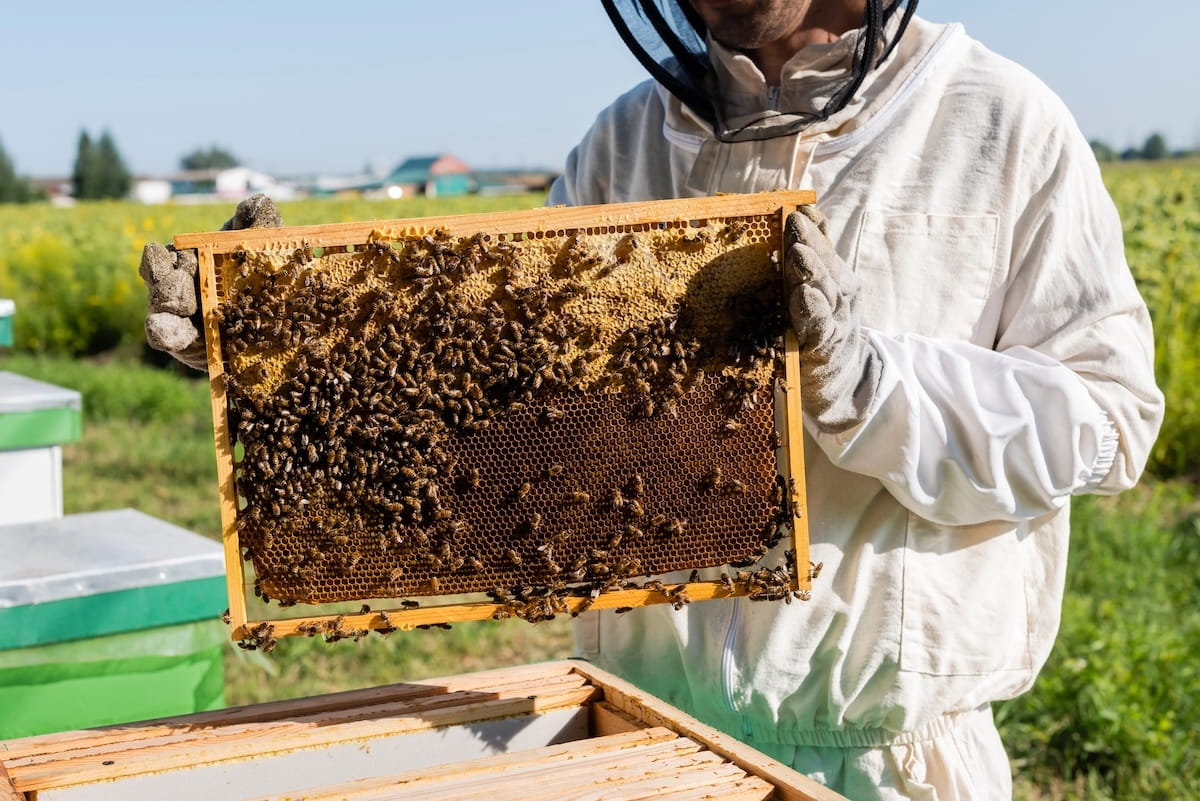
Truly understanding honey requires looking at the fascinating biology of the bees themselves. Bees gather nectar in a specialized “honey stomach” where enzymes and gut bacteria begin breaking it down.
Once back at the hive, they regurgitate the mixture for hive bees to further process. Finally, the bees fan their wings to evaporate water until the mixture reaches a moisture content of roughly 17-18%, at which point it is capped with wax as honey.
Magista also points out “Forest Dew” honey, made when bees gather the sugary liquid excreted by aphids on coniferous trees. “It’s double-insect processed honey,” laughs Magista. “And it tastes amazing.”
How To Help Ensure Your Honey Is Ethical
Now that you know the complexities of the industry, here is how you can ensure you are buying honey that is good for you, the bees, and the planet:
- 1. Prioritize Raw and Unfiltered: To get the health benefits experts discuss, look for “raw” labels. This ensures the honey hasn’t been heated to temperatures that kill beneficial enzymes. “Unfiltered” ensures the pollen remains, allowing the honey to be traced to its source.
- 2. Look for Glyphosate-Free Certification: Much of the world’s honey is contaminated with herbicides. Seek out brands that forage in wild, remote areas or hold glyphosate-free certifications to ensure you aren’t ingesting agricultural chemicals.
- 3. Demand Single-Origin Transparency: Avoid “honey blends” or jars without a clear country of origin. These are prime candidates for honey laundering. True ethical honey should be traceable back to a specific region or co-op.
- 4. Support Conservation Beekeeping: Ethical beekeepers practice “balanced beekeeping,” only taking surplus honey and ensuring the bees have enough of their own nutrient-rich food to survive the seasons, rather than replacing their diet with sugar water.
- 5. Meet the Maker: The gold standard for ethical honey is buying from a local beekeeper at a farmers market. You can ask them directly about their hive management and where their bees forage. If you can’t buy locally, look for mission-driven brands—like Heavenly Organics—that provide a transparent hive-to-jar story.